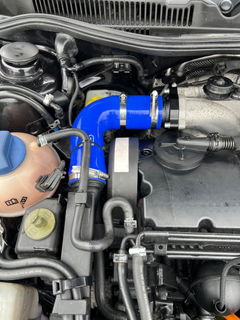
Aluminium Elbows

4 products

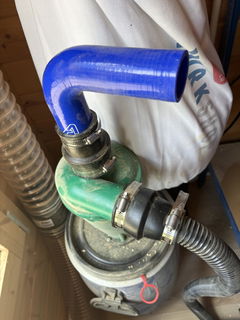
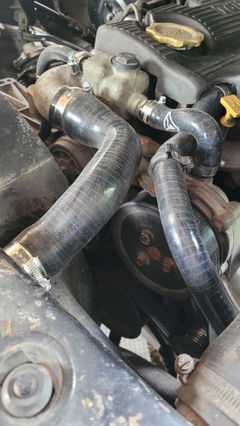
  • 90 Degree Aluminium Elbow Metal Tubes Auto Silicone Hoses

    90 Degree Aluminium Elbow

    -40°C to +220°C 150mm Leg 300mm Total
    Regular price From £10.32
    Sale price From £10.32 Regular price
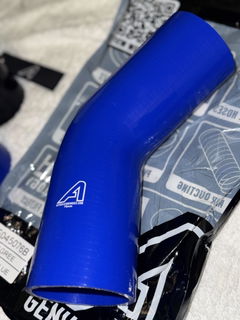
  • 45 Degree Aluminium Elbow Metal Tubes Auto Silicone Hoses

    45 Degree Aluminium Elbow

    -40°C to +220°C 150mm Leg 300mm Total
    Regular price From £10.32
    Sale price From £10.32 Regular price
  • 180 Degree Aluminium Elbow Metal Tubes Auto Silicone Hoses

    180 Degree Aluminium Elbow

    -40°C to +220°C 100mm Leg 200mm Total
    Regular price From £12.00
    Sale price From £12.00 Regular price
  • 135 Degree Aluminium Elbow Metal Tubes Auto Silicone Hoses

    135 Degree Aluminium Elbow

    -40°C to +220°C 100mm Leg 200mm Total
    Regular price From £12.00
    Sale price From £12.00 Regular price

Aluminium Elbows

Aluminium elbows let you route pipework around obstacles without choking the flow through it. Our range covers 45°, 90°, 135° and 180° bends in outside diameters from 13mm to 102mm, so you can plan a run around an engine bay, a bulkhead or a machine frame and still hold a consistent bore from end to end.

Each elbow is formed from high-grade T6063 aluminium with a 1.6mm wall. That gives you the strength to take clamping loads and boost pressure while staying far lighter than an equivalent steel bend, and the alloy's natural corrosion resistance means no coating to chip or flake in service. The bend itself is formed rather than cut and welded, so the internal surface stays smooth and the cross-section stays round through the radius — the flow does not see a step or a weld seam.

Both ends are beaded. The raised lip gives a silicone or rubber hose something positive to grip, and stops a joint blowing off under pressure once a clamp is tightened over it. Match the elbow's outside diameter to your hose's internal diameter, add the appropriate hose clamp, and the joint will hold.

Commonly used in intercooler and charge pipework, cold air intakes, coolant routing, ventilation and air handling, and general industrial fabrication where a light, corrosion-resistant bend is needed.

What are aluminium elbows used for?

They are hard pipe bends that turn a corner in a pipework run without using a flexible hose. In intercooler, turbo and intake plumbing an alloy elbow keeps the bore perfectly round under boost, holds the routing exactly where you want it, and gives a much tidier installation than trying to bend a hose round the same corner. They are also widely used in water systems and industrial pipework.

What angles and sizes do you stock?

45, 90, 135 and 180 degree elbows, in outside diameters from 13mm to 102mm - seventeen sizes in each angle. The 45 and 90 degree elbows have 150mm legs each side, giving 300mm total; the 135 and 180 degree elbows have 100mm legs, giving 200mm total. Order by outside diameter, because that is what the hose slides over.

Are the ends beaded?

Yes - each end is formed with a bead so that the hose clamp pulls the hose down behind a raised lip rather than relying on friction alone. That is what stops a joint blowing off under boost. It is the reason these are the sensible choice for charge air pipework, where an unbeaded joiner can let go under pressure.

What material and rating are they?

T6063 aluminium alloy with a 1.6mm wall, rated -40C to +220C. T6063 gives good strength and corrosion resistance at a fraction of the weight of steel, and it sheds heat well - a useful property in charge air pipework where you want to keep intake temperatures down. It will not rust, and it needs no coating to survive in service.

Aluminium or stainless steel - which should I use?

Aluminium is lighter, cheaper and rejects heat faster, which makes it the usual choice for intercooler and intake pipework. Stainless is stronger, more corrosion resistant in salt environments, and takes a better polish, which makes it the better pick for marine work and visible show pipework. We stock both in overlapping size ranges so you can mix them in one system.

Can I cut the legs shorter?

You can cut the plain section, but not near the bead - cutting off the bead removes the very feature that stops the hose blowing off. Work out which leg needs shortening, cut from the middle of the straight section, and leave at least 25-30mm of tube beyond the bead for the hose and clamp. Deburr inside and out afterwards so the edge cannot score the hose bore.