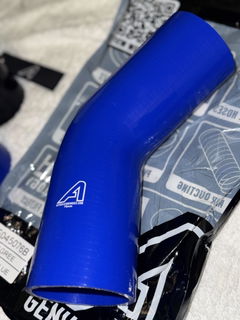
Silicone End Caps

2 products

  • Silicone Rubber Caps Silicone Hose Auto Silicone Hoses 4mm Blue

    3 total reviews

    Silicone Rubber Caps

    Regular price From £1.62
    Sale price From £1.62 Regular price
  • Silicone Reinforced Blanking Cap Silicone Hose Auto Silicone Hoses 4mm Blue

    Silicone Reinforced Blanking Cap

    Regular price From £10.58
    Sale price From £10.58 Regular price

Silicone End Caps

Silicone end caps and blanking caps, reinforced and unreinforced.

What are silicone bungs and caps for?

They blank off a pipe stub, hose tail or tube end that you are not using. Common cases are deleting an air injection or EGR takeoff, blanking a redundant heater or vacuum port after an engine swap, capping an unused water outlet on a manifold, and protecting open pipe ends during storage, transport, painting or blasting.

What is the difference between the plain and the reinforced cap?

The plain silicone cap is unreinforced extruded silicone, 35mm long, in 4mm to 38mm internal diameters - the right choice for blanking off a low or zero pressure stub. The reinforced blanking cap has a polyester braid layer, is 60mm long, comes in 4mm to 25mm, and carries a 5 to 12 bar working pressure rating. If the port sees any real pressure, use the reinforced one.

Which one do I need for a pressurised coolant or boost port?

The reinforced cap, without question. An unreinforced cap on a pressurised port will balloon and eventually blow off - and a coolant cap letting go under pressure means a sudden loss of coolant, often at the worst moment. The reinforced version is rated 5 to 12 bar depending on size and is built for exactly this duty.

What temperature will they take?

The plain caps are rated -50C to +220C with short-term peaks to +250C. The reinforced caps are rated -50C to +250C. Both are built to SAE J20 R3, so they are suitable for coolant service and general engine bay temperatures. As with all standard silicone, they are not suitable for fuel or oil contact.

How do I size a cap?

Measure the outside diameter of the pipe stub you are blanking and choose the cap with the matching internal diameter. It should be a firm push fit that needs some effort, not something that slides on loosely. If you are between sizes, go for the smaller bore - silicone will stretch onto a slightly larger stub and the resulting grip is better than a loose fit.

Do I need a clip as well?

On a zero-pressure stub the interference fit is usually enough. On anything pressurised, always fit a clip - a stainless worm drive clip on coolant, and a T-bolt clamp on boost. Position it over the section of cap that is supported by the stub underneath, not out at the closed end where there is nothing behind it to clamp against.