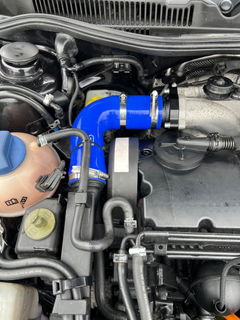
Gummi-Vakuum-Druckluftbremsservoschlauch

1 Produkt

  • Rubber Vacuum Air Brake Servo Hose Hoses UK 13mm 1 Metre

    Rubber Vacuum Air Brake Servo Hose

    Oil Resistant Reinforced Flexible

    2 Gesamtbewertungen

    Regulärer Preis Ab £5.71
    Angebotspreis Ab £5.71 Regulärer Preis

Gummi-Vakuum-Druckluftbremsservoschlauch

EPDM-Gummi-Druckluftbremsservoschlauch ist ein Schlauchtyp, der in Druckluftbremssystemen von Kraftfahrzeugen verwendet wird. Er besteht aus EPDM-Kautschuk (Ethylen-Propylen-Dien-Monomer), einem synthetischen Gummimaterial, das für seine Haltbarkeit und Beständigkeit gegen Hitze, Sonnenlicht und Ozon bekannt ist. Dies macht es zu einem idealen Material für den Einsatz in Druckluftbremssystemen, die hohen Temperaturen und rauen Betriebsbedingungen ausgesetzt sind.

EPDM-Gummi-Druckluftbremsservoschläuche werden typischerweise zum Verbinden der verschiedenen Komponenten eines Druckluftbremssystems verwendet, wie beispielsweise Bremspedal, Bremskammer und Luftbehälter. Er ist flexibel und kann hohem Druck standhalten. Daher eignet er sich für den Einsatz in Druckluftbremssystemen, die eine präzise Steuerung und einen reibungslosen Betrieb erfordern.

In Bezug auf die technischen Eigenschaften ist der EPDM-Gummi-Druckluftbremsservoschlauch normalerweise für den Einsatz bei Drücken bis zu 200 Pfund pro Quadratzoll (PSI) und Temperaturen bis zu 200 Grad Fahrenheit ausgelegt. Er ist außerdem ozon- und sonnenlichtbeständig und daher für den Einsatz im Außenbereich geeignet. Insgesamt ist der EPDM-Gummi-Druckluftbremsservoschlauch ein wichtiger Bestandteil von Druckluftbremssystemen in Kraftfahrzeugen und seine Haltbarkeit und Widerstandsfähigkeit gegenüber extremen Temperaturen machen ihn zu einer wertvollen Ergänzung für jedes Fahrzeug.

What is this hose used for?

It serves two closely related jobs: vacuum lines feeding a brake servo on cars and light vehicles, and pneumatic control lines in commercial vehicle braking systems. Both need a hose that will not collapse under negative pressure, resists oil contamination from the engine bay, and survives years of heat and ozone exposure without hardening. It is built to BSAU110 and conforms to SAE J1402.

Why can't I use ordinary rubber hose on a brake servo?

Because a servo line runs under vacuum, not pressure. Ordinary hose without adequate wall reinforcement will slowly draw shut, and a partially collapsed servo hose gives a hard pedal that comes and goes - a genuinely dangerous and very hard fault to diagnose. This hose is reinforced with high-tensile braided fibre specifically so it holds its bore under vacuum.

What sizes and lengths do you offer?

Internal diameters of 9.5mm and 13mm, cut to order from 1 metre up to a 50 metre full coil. Those two sizes cover the overwhelming majority of servo and vacuum applications. Measure the outside diameter of the servo spigot and the manifold takeoff and match the hose bore to it - the hose should need a firm push to go on, not slide on loose.

Will it resist oil and fuel contamination?

It is oil resistant, which matters because a servo line sits in an engine bay where oil mist, splashes and fuel vapour are unavoidable. That resistance is why it lasts where a general-purpose rubber hose goes soft and swells. It is not intended as a fuel delivery hose though - for carrying fuel use our SAE J30 R6 rubber fuel hose or fluorosilicone-lined silicone.

What material is it and why does that matter?

A synthetic rubber inner tube with braided fibre reinforcement and an ozone-resistant synthetic rubber outer cover. Ozone resistance is the reason the outer does not craze and crack after a few summers under the bonnet - that surface crazing is usually the first visible sign that an old servo hose is on its way out, even before it starts to collapse.

How do I fit it?

Cut it square, push it fully home over the spigot so it seats past any barb, and secure with a hose clip at each end. Route it away from the exhaust manifold and turbo, and support it so it cannot rub on a bracket or the bonnet slam panel. A vacuum leak from a chafed servo hose gives a lumpy idle as well as a poor pedal, so routing is worth taking care over.