- All products
-
 1 Metre Fuel & Oil Silicone Straight
-
 1 Metre Classic Wrapped Straight Silicone Hose
-
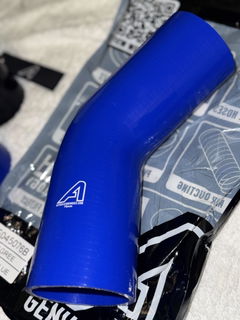
 45 Degree Fuel & Oil Silicone Elbow
-
 45 Degree Wrapped Silicone Elbow
-
 45 Degree Fuel & Oil Silicone Long Leg Elbow
-
 90 Degree Fuel & Oil Silicone Elbow
-
 90 Degree Wrapped Silicone Elbow
-
 90 Degree Fuel & Oil Silicone Long Leg Elbow
-
 Silicone Fluoro Coupler Hose
-
 Fluorosilicone Hose Off Cut Mixed Box


-

1 Metre Fuel & Oil Silicone Straight
E5/E10 Fluoro Lined SAE J30R6Regulärer Preis Ab £13.44Angebotspreis Ab £13.44 Regulärer PreisStückpreis pro -

1 Metre Classic Wrapped Straight Silicone Hose
E5/E10 Fluoro Lined Cloth WrappedRegulärer Preis Ab £20.45Angebotspreis Ab £20.45 Regulärer PreisStückpreis pro -

45 Degree Fuel & Oil Silicone Elbow
E5/E10 Fluoro Lined SAE J30R6Regulärer Preis Ab £8.02Angebotspreis Ab £8.02 Regulärer PreisStückpreis pro -

45 Degree Wrapped Silicone Elbow
E5/E10 Fluoro Lined Cloth WrappedRegulärer Preis Ab £9.79Angebotspreis Ab £9.79 Regulärer PreisStückpreis pro -

45 Degree Fuel & Oil Silicone Long Leg Elbow
300mm Leg 600mm Long 3 & 4 PlyRegulärer Preis Ab £16.51Angebotspreis Ab £16.51 Regulärer PreisStückpreis pro -

90 Degree Fuel & Oil Silicone Elbow
E5/E10 Fluoro Lined SAE J30R6Regulärer Preis Ab £8.02Angebotspreis Ab £8.02 Regulärer PreisStückpreis pro -

90 Degree Wrapped Silicone Elbow
-60°C to +180°C E5/E10 Classic FinishRegulärer Preis Ab £9.79Angebotspreis Ab £9.79 Regulärer PreisStückpreis pro -

90 Degree Fuel & Oil Silicone Long Leg Elbow
300mm Leg 600mm Long 3 & 4 PlyRegulärer Preis Ab £16.51Angebotspreis Ab £16.51 Regulärer PreisStückpreis pro -

Silicone Fluoro Coupler Hose
-50°C to +250°C E5/E10 Fluoro LinedRegulärer Preis Ab £5.68Angebotspreis Ab £5.68 Regulärer PreisStückpreis pro -
 Bis zu £7.50 Rabatt
Fluorosilicone Hose Off Cut Mixed Box
Fluoro Lined Mixed Sizes Fuel & Oil SafeRegulärer Preis £9.99Angebotspreis £9.99 Regulärer PreisStückpreis pro£17.49


Silikon-Kraftstoff- und Ölschläuche und -Kniestücke
Mit Fluorkohlenwasserstoff ausgekleidete Silikonschläuche werden zum Transport von Kraftstoff oder Öl in Umgebungen mit hohen Temperaturen oder rauen Bedingungen verwendet. Sie bestehen aus Silikonkautschuk, einem synthetischen Kautschuk, der für seine hervorragende Hitze- und Chemikalienbeständigkeit sowie seine Flexibilität und Haltbarkeit bekannt ist. Die Innenseite des Schlauchs ist mit Fluorkohlenwasserstoff ausgekleidet, einem synthetischen Material, das gegen Kraftstoffe und Öle beständig ist.
Mit Fluorkohlenwasserstoffen ausgekleidete Gummischläuche aus Silikon werden häufig in der Automobil- und Industrieindustrie eingesetzt, wo Kraftstoff oder Öl bei hohen Temperaturen oder in rauen Umgebungen transportiert werden muss. Sie werden oft als Ersatzschläuche für Fahrzeuge und Maschinen verwendet und sind beständig gegen die abrasive Wirkung von Kraftstoffen und Ölen.
Diese Schläuche sind in verschiedenen Größen und Farben für unterschiedliche Anwendungen erhältlich. Sie können mit Armaturen gleichen Durchmessers oder mit Armaturen unterschiedlichen Durchmessers verwendet werden, je nach den spezifischen Anforderungen der Anwendung. Für zusätzliche Festigkeit und Haltbarkeit sind sie häufig mit einem Textil- oder Metallgeflecht verstärkt.
Fluorsilikon ist eine Variante von Silikonkautschuk, die eine ausgezeichnete Hochtemperaturstabilität und hervorragende mechanische Eigenschaften aufweist und gleichzeitig eine höhere Beständigkeit gegen Kraftstoff, Öl und andere Chemikalien bietet.
Entwickelt für die Übertragung von Öl und Diesel und begrenzten Benzindämpfen. NICHT für den kontinuierlichen Gebrauch von Benzin/Kraftstoff oder für Kraftstoffleitungen.
What makes these different from standard silicone hose?
What is in the range?
Is it compatible with E5 and E10 petrol?
What temperature range does it cover?
Why is it all black?
What is the classic wrapped hose?
Questions about Silikon-Kraftstoff- und Ölschläuche und -Kniestücke?
Need something bespoke?