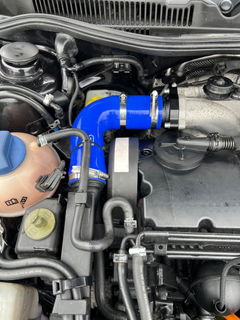
Silicone Vacuum Hose

1 product

  • Silicone Vacuum Hose Silicone Hose Auto Silicone Hoses 3mm x 7mm 1 Metre Blue

    Silicone Vacuum Hose

    Thin Walled High Temp Flexible

    3 total reviews

    Regular price From £1.01
    Sale price From £1.01 Regular price

Silicone Vacuum Hose

Silicone vacuum extruded silicone hose is a type of flexible tubing that is commonly used in a wide range of applications, including medical devices, automotive systems, and industrial machinery. It is made from a silicone-based polymer, which gives it several beneficial properties, such as excellent temperature resistance, high flexibility, and good chemical resistance.

To manufacture silicone vacuum extruded silicone hose, a process called vacuum extrusion is used. This involves heating and mixing the raw silicone polymer to create a viscous liquid, which is then extruded through a die and pulled through a series of vacuum chambers to create a hollow tube. The vacuum chambers are used to remove any air bubbles that may be trapped in the material, resulting in a smooth and uniform surface on the finished hose.

One of the key advantages of silicone vacuum extruded silicone hose is its durability and resistance to extreme temperatures. It can withstand temperatures ranging from -60°C to +180°C, making it suitable for use in both hot and cold environments. Additionally, it is resistant to UV radiation and ozone, which means it won't deteriorate or become brittle over time when exposed to these elements. This makes it a long-lasting and reliable choice for a wide range of applications.

What is silicone vacuum hose used for?

It is thin-walled unreinforced silicone tubing for vacuum lines, breathers and signal lines - boost gauge feeds, wastegate and solenoid signal lines, carburettor and manifold vacuum takeoffs, crankcase breathers, and general small-bore pneumatic and laboratory work. It is chosen for heat resistance and long life rather than for pressure capability.

What sizes do you offer?

Thirty size combinations from 3mm x 7mm up to 10mm x 16mm - the first figure is the internal diameter and the second the outside diameter, so you can pick the wall thickness that suits. Lengths run from 1 metre up to a 30 metre full coil, in blue, red, black and clear. Order by internal diameter to match the spigot it pushes onto.

What temperature will it take?

It is VMQ silicone rated from -60C to +180C with short peaks above that. That is far beyond what the rubber or plastic vacuum tubing fitted as standard to most vehicles will manage, which is why original vacuum lines go hard and split near the manifold while silicone stays pliable. It also stays flexible in the cold rather than becoming brittle.

Is it suitable for fuel or oil lines?

No. This is standard VMQ silicone, which swells and degrades in contact with petrol, diesel and oil. Be particularly careful with breather lines - a crankcase breather carries oil mist and will destroy plain silicone over time. For anything carrying hydrocarbons use our fluorosilicone-lined hose, which is made for exactly that job.

It is unreinforced - will it collapse under vacuum?

For normal manifold vacuum and signal-line duty in the sizes offered, no - the wall thickness is chosen to hold its shape. But it is not a reinforced hose, so do not use it on the suction side of a pump, under strong sustained vacuum, or in large diameters where an unreinforced wall will draw shut. For those, use a hose with a wire helix.

Can I use it under boost pressure?

For low-pressure signal lines to a gauge or solenoid it is fine. It is not a pressure hose and should not be used for charge air, coolant under pressure, or anything where a failure matters. If a line is carrying boost rather than merely sensing it, use reinforced silicone. Unreinforced tubing will balloon and eventually split under sustained pressure.